Why UK Homeowners Are Plugging Solar Panels Into a Normal Wall Socket – 7 Things to Know Before Your Next Bill
Since 27 August 2026 it's legal in Great Britain. Most people still have no idea. Here's what it costs, what it honestly saves – and who it's not for.
 By the Solarfy team, Birmingham · 6 min read · Sources: Ofgem, ENA, DESNZ, Which?
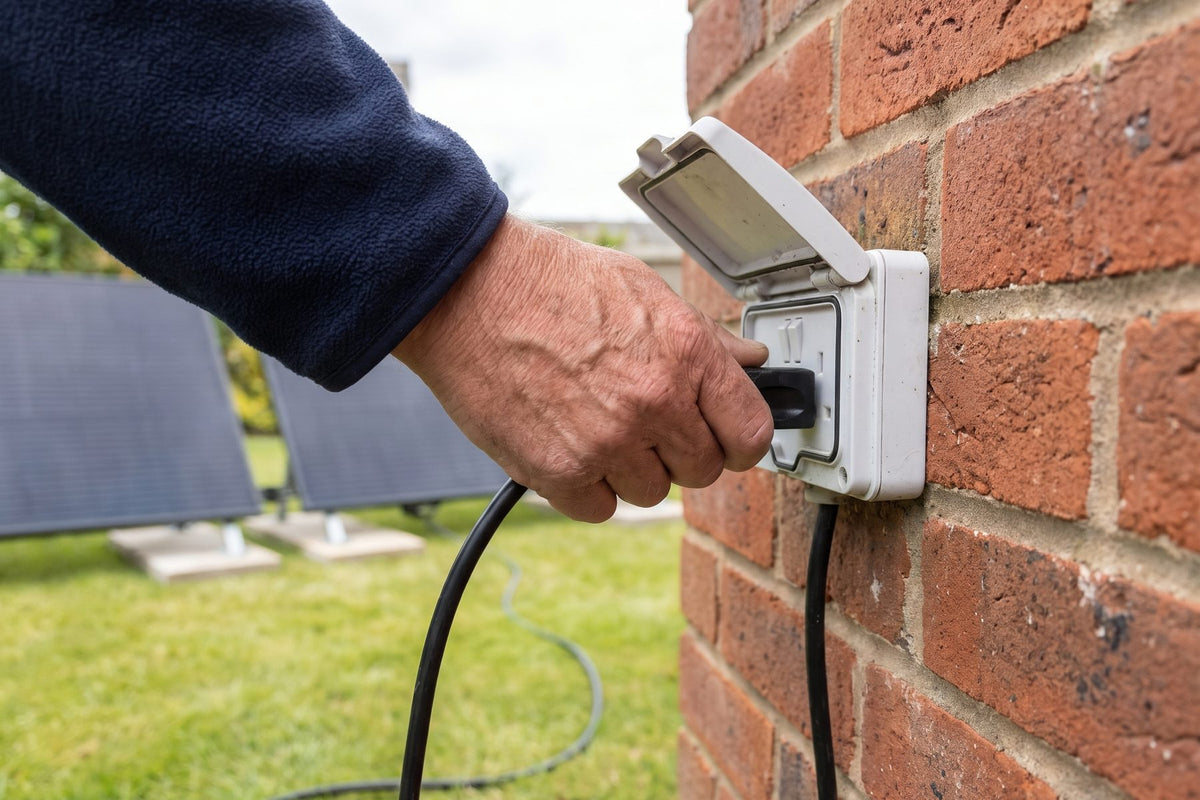
At a glance: three ways to deal with your electricity bill
| Plug-in solar (Solarfy Duo) | Rooftop solar | Do nothing | |
|---|---|---|---|
| Upfront cost | £549 | around £7,400* | £0 |
| Roof or scaffolding needed | No | Yes | – |
| Installer needed | Not for most homes | Yes | – |
| Set-up time | An afternoon | Weeks (quotes, booking) | – |
| Take it when you move | Yes | No | – |
| Your bill | Lower from day one | Lower | Keeps rising |
*Typical 4.6 kW rooftop system, source: Which? (2026). Rooftop solar saves more per year – but costs over 13× as much.
1It's finally legal – and most people don't know yet
Until this summer, solar in Britain meant a roofer, scaffolding and an installer's certificate. On 27 August 2026 new rules came into force: approved plug-in solar kits can now be plugged straight into a normal, fixed wall socket in England, Scotland and Wales.
In Germany, where this has been allowed for years, more than a million homes already do it – on balconies, patios, garage roofs and garden fences.
The one thing to check before you buy
It only applies to kits listed as compliant on the official ENA register. "UK compatible" on a marketplace listing is not the same thing. Every Solarfy kit is on the register:
- Kit
- Solarfy Duo 910
- ENA reference
- SOLAW/21608
- Status
- ✓ Listed as compliant
You can look it up yourself on the ENA type-test register before you order.
2Your home is spending money even when you're not using anything
Your fridge, freezer, broadband router and everything on standby run 24 hours a day. That constant "base load" quietly eats a big chunk of your bill – and since 1 October you pay 26.32p for every unit under the energy price cap, up 4%. Another rise is widely expected in January.
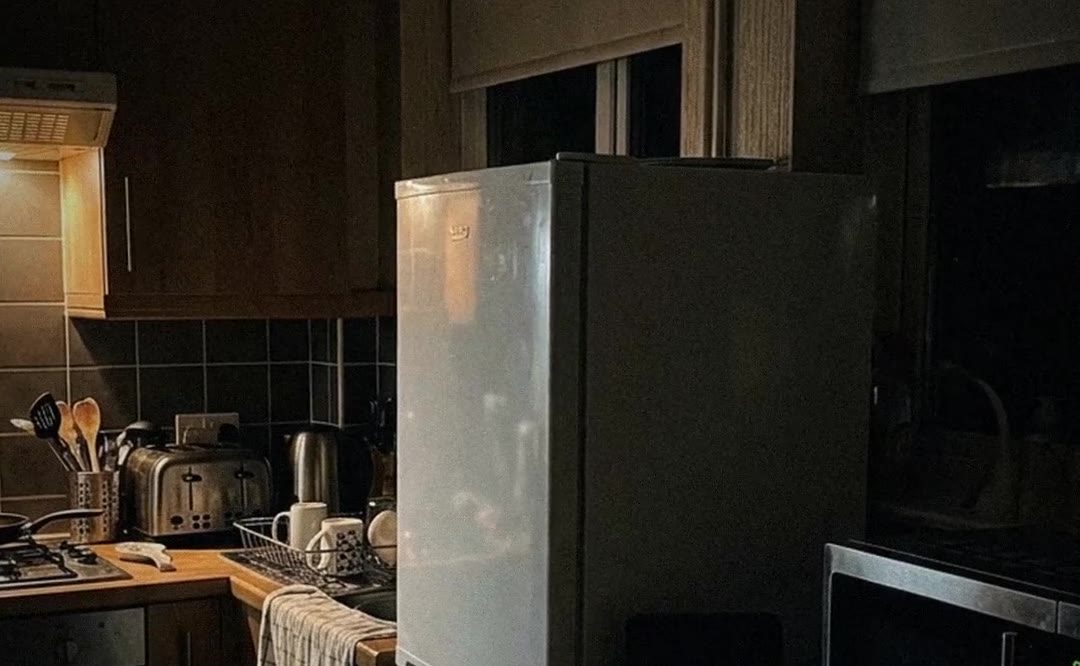
Meanwhile, the sun is shining on your garden, patio or garage roof for free. Plug-in solar simply lets your home use that light first – before it buys a single unit from the grid.
"If I could get a couple of panels on each of my W/S/E elevations I could cover my base load for most of the day."– Homeowner on the MoneySavingExpert forum
3How it works: sunlight in, smaller bill out
- Panels on your garden, patio or flat roof turn daylight into electricity.
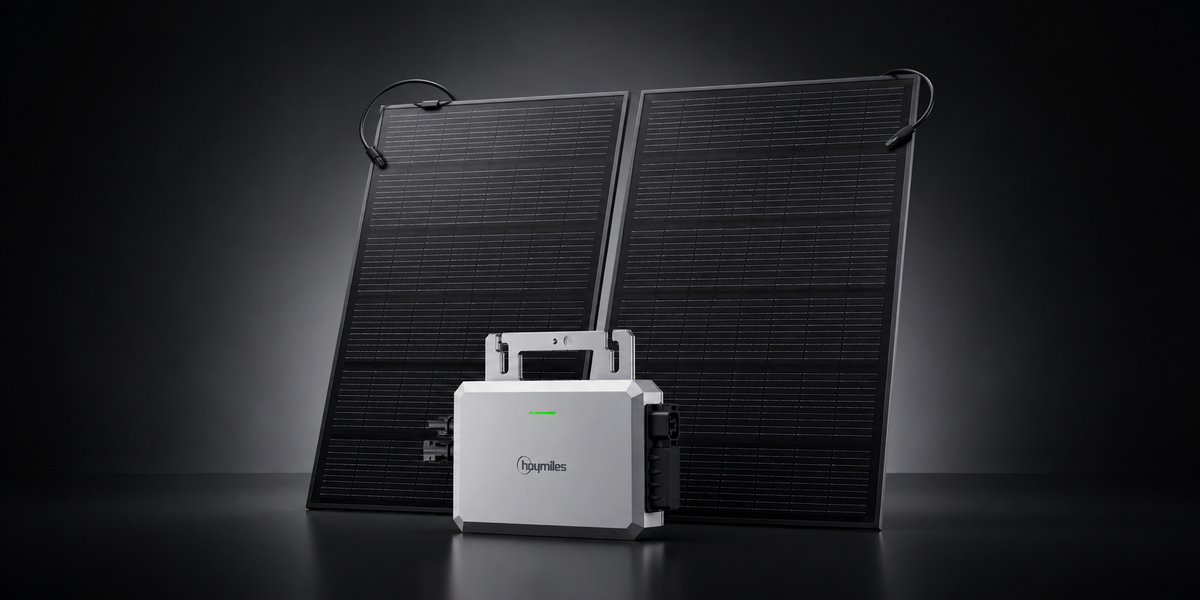
- A Hoymiles micro-inverter – one of the world's leading makers – converts it into normal 230 V household power and switches off automatically if the grid goes down.
- You plug it into a fixed wall socket. Your home automatically uses the solar power first. Up to 800 W, no battery, no rewiring.
- You register it in a few minutes on the official site myplugin.solar (free, run by the Energy Networks Association). That's the paperwork done.
4Will it actually work for my home? The honest answer
Plug-in solar isn't for everyone, and we'd rather tell you now than deal with a return later. The Solarfy Duo stands on its own frame, so it doesn't need a roof – just a sunny bit of ground.
It works best if you have…
- a garden, patio, flat garage or extension roof facing roughly south, east or west, with little shade
- a fixed wall socket within reach (the kit reaches about 5 m as standard – up to 14 m with a longer solar DC cable)
- things running during the day – fridge, router, a washing machine or dishwasher on a daytime timer
What it saves – no hype
In a sunny, unshaded spot the Solarfy Duo 910 makes around 650 kWh a year. If you use 60–70% of that at home, that's around £100–£120 a year at today's price cap. The government's own estimate for plug-in solar is £70–£110 a year. At our figures it pays for itself in roughly five years – the panels carry a 30-year and the micro-inverter a 12-year manufacturer warranty. When prices rise, your savings rise with them.
When you'll need an electrician (or shouldn't buy)
- There's no suitable socket nearby – a new outdoor socket must be fitted by an electrician. Never use an extension lead.
- Your wiring or fuse box is very old (no RCD protection) – get a quick safety check first.
- You live in Northern Ireland – plug-in solar isn't approved there yet.
- You'd mount it on a timber balcony or combustible cladding – that's not allowed. Renting? You'll need your landlord's OK (we include a ready-to-send letter).
 Not sure your socket is close enough?The product page has a 30-second guide to measuring – and the kit comes in three cable lengths.
Check your home →
5No roof. No scaffolding. No £7,400 quote.
A typical rooftop system costs around £7,400, needs scaffolding and an installer, and stays on the house when you move. Rooftop solar is a great long-term investment – if you own the roof and have the budget.
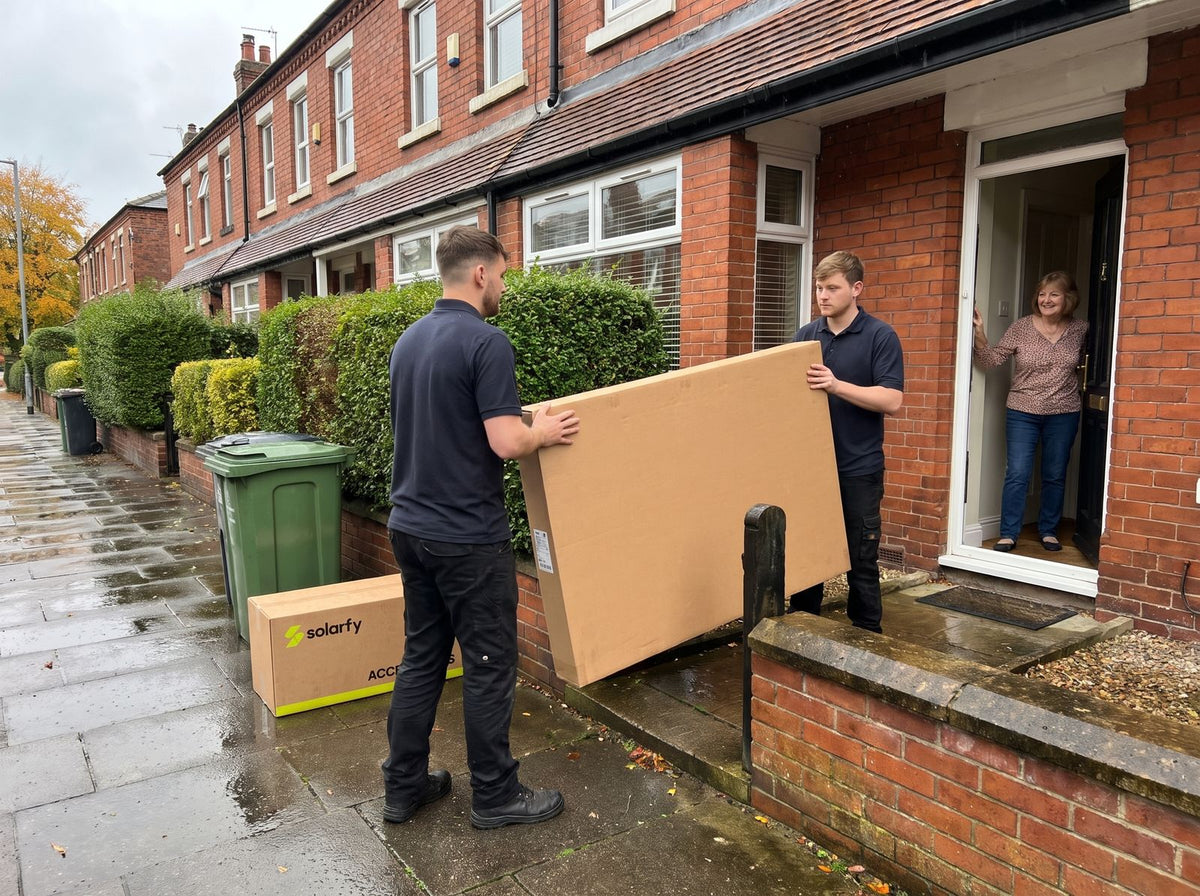
Plug-in solar is the version for everyone else. The Solarfy Duo arrives with a free two-person delivery – the panels are full-size (1.76 m × 1.13 m, 22 kg each), so we don't leave them on your doorstep.
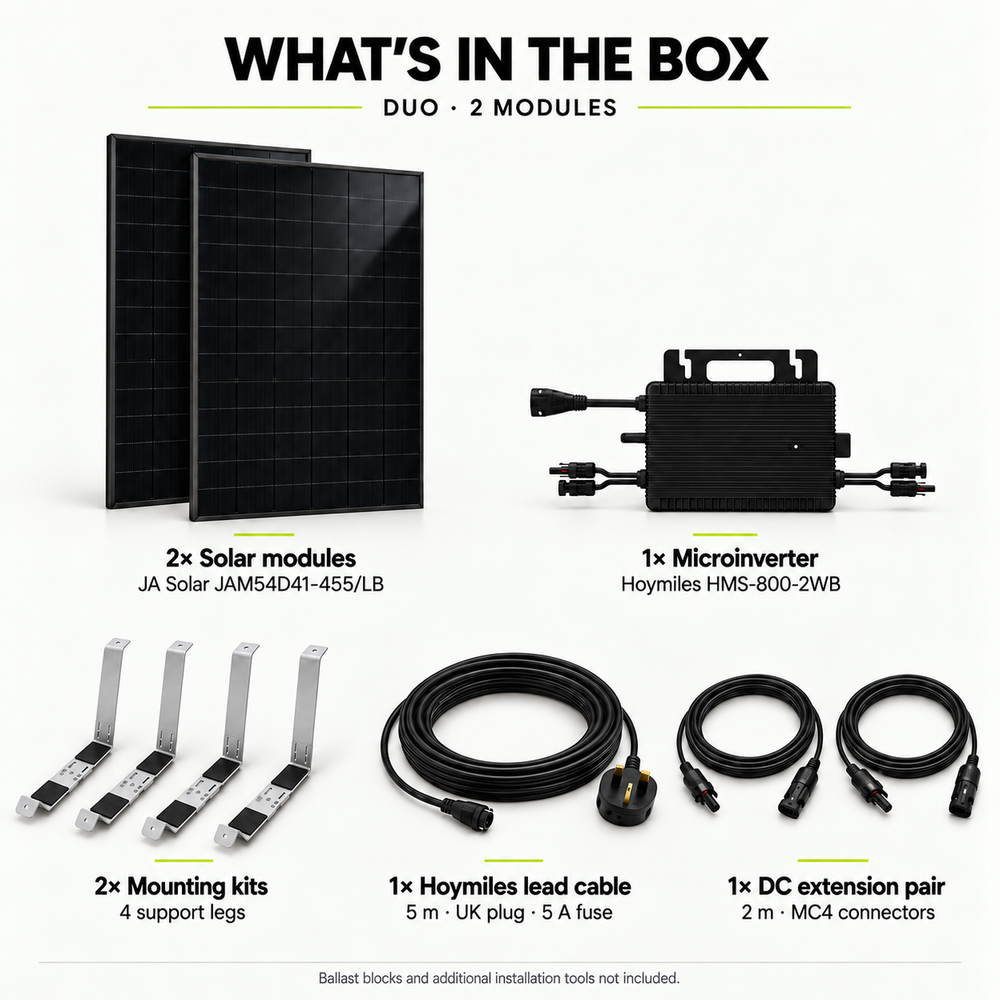
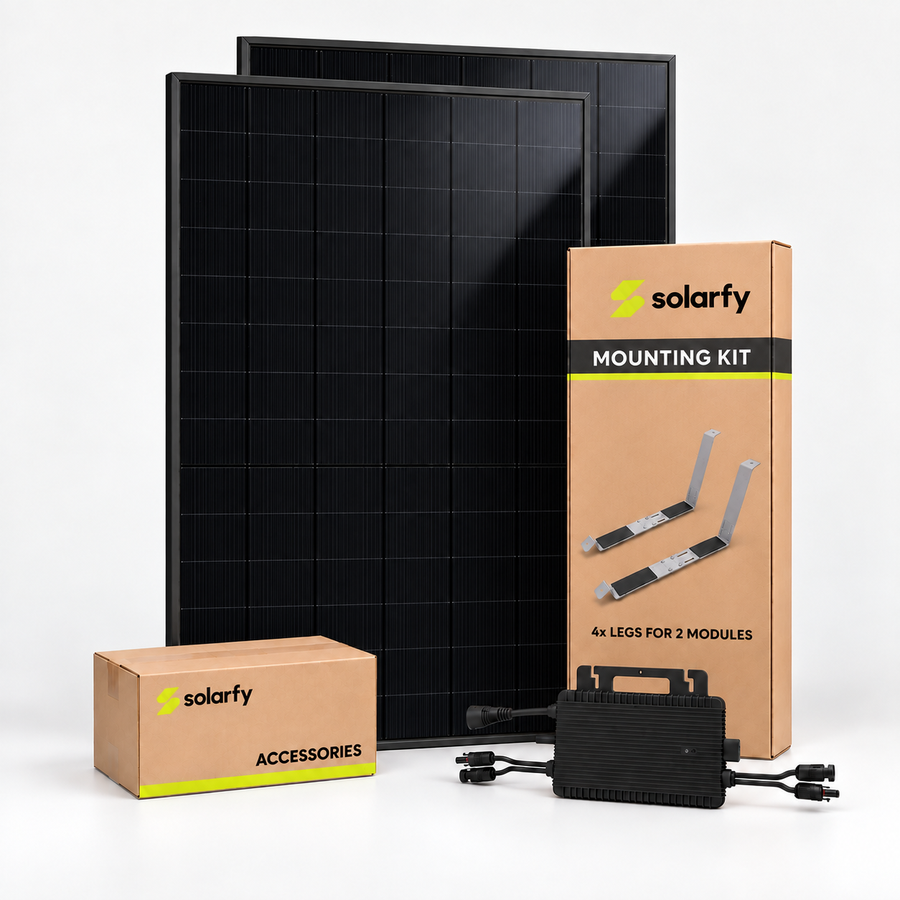
Everything comes in the box: two 455 W panels, the Hoymiles micro-inverter, the flat mount, the 5 m AC lead cable with a UK plug and the solar DC cable. Move house? Unplug it and take it with you.
6Germany did it first – and we were there
Plug-in solar is new to Britain, but it isn't new. Germany has more than a million registered systems. The team behind Solarfy has shipped more than 10,000 orders to German households and installers since 2022 – our German store is rated 4.6★ by 100+ customers on Trustpilot.
We took what we learned there and built kits specifically for UK rules: ENA-registered, a factory-fitted UK plug, Hoymiles micro-inverter, and a UK warehouse in Birmingham.
7Why order in winter?
Because the months that matter most are March to September – and you want to be ready on the first bright spring day, not still waiting for a delivery slot. Set it up and register it now, and every sunny winter day is a bonus.
Demand has also surprised everyone: since launch, approved kits have sold out at UK retailers including Octopus Energy and City Plumbing – Octopus's first batch went in about two weeks. Our kits ship from stock in Birmingham.
Quick answers
Do I need an electrician?
Not if you already have a fixed, RCD-protected socket within reach. You only need one if a new outdoor socket has to be fitted or your wiring is very old.
Is it safe to plug into a normal socket?
Yes – for kits on the ENA register. The Hoymiles micro-inverter limits output to 800 W and switches off automatically if the plug is pulled or the grid goes down.
Does it work in winter?
It still produces on bright days, but much less. Most of the yearly output comes from March to September – which is why setting up now means you catch the whole season.
Can I get paid for what I don't use?
Plug-in solar is designed for using the power yourself. Some suppliers may offer export payments – the savings figures on this page assume you don't get any.
What if I rent?
Ask your landlord first – we include a ready-to-send letter. Because nothing is fixed to the building, you take it with you when you move.
The smarter way to a smaller bill
Approved plug-in solar, done properly: ENA-registered, honest numbers, free 2-person delivery, and a UK team on live chat if you get stuck.